1. Marble

2. Groin Vaults

3. Lilium Corsage

4. Foxglove

5. Chair

6. Candle Holder

Located in Fort Tryon Park, The Met Cloisters is a museum dedicated to the art, architecture, and gardens of medieval Europe. Throughout this semester, I observed the objects, architecture, plants, and visitors within the Cloisters while also documenting patterns of movement, sensory experiences, and interactions with the space.
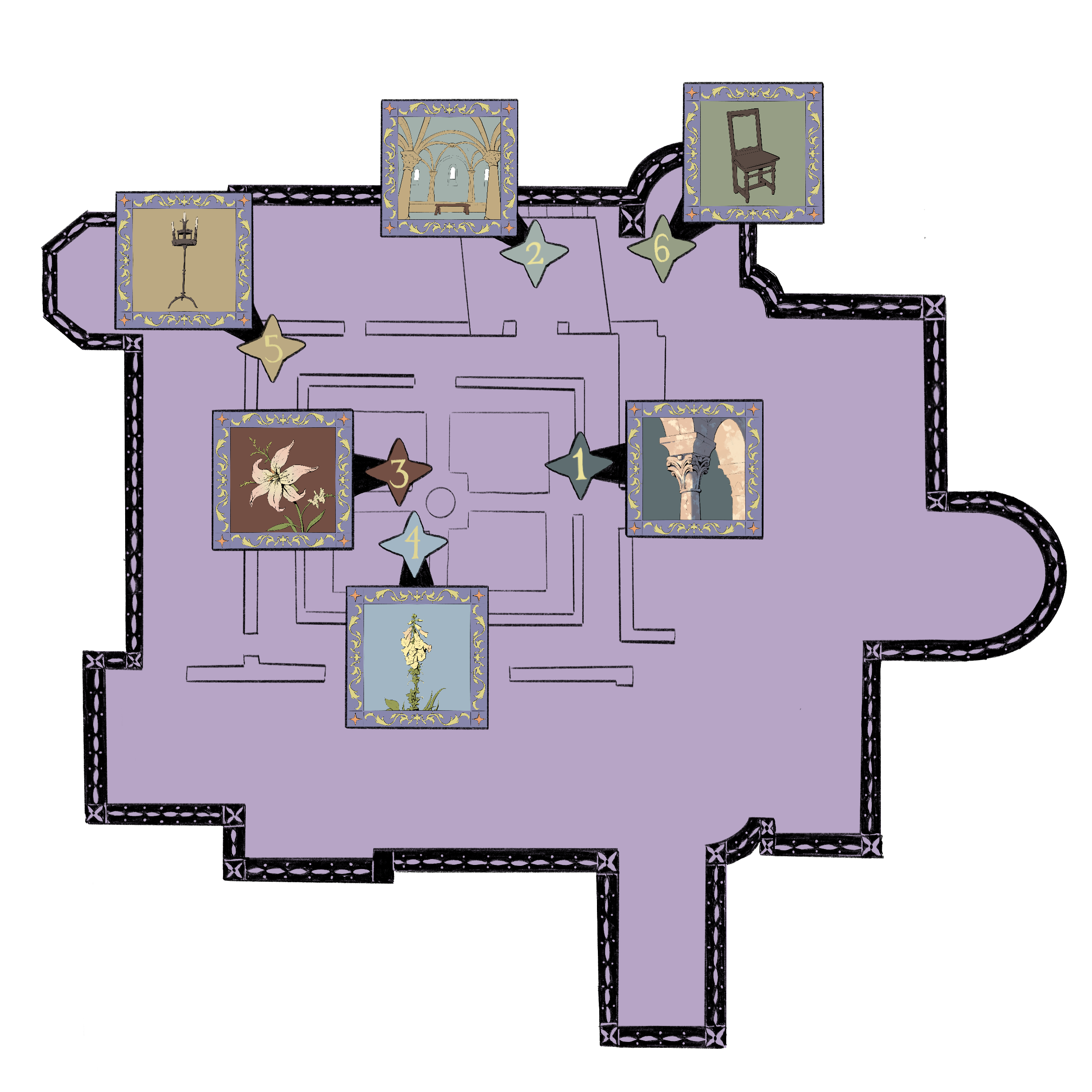
1. Marble
2. Groin Vaults
3. Lilium Corsage
4. Foxglove
5. Chair
6. Candle Holder
As a popular museum, The Cloisters attracts visitors who frequently document their experience through photography. During a 40-minute observation period, I recorded the subjects that people chose to photograph, revealing what most captures visitors’ attention.

There are a wide variety of flowers in the Cuxa garden, each with its own texture and unique scent! Some of them smell good, some of them smell not so good.

Touch is an often overlooked way of experiencing a space. Different materials absorb and retain heat differently. Here are a few of the objects I touched at the Cloisters, as well as the perceived temperatures against the skin.

Although visitors come to the Cloisters primarily to view medieval art and architecture, the space is experienced through much more than sight. By observing what people photograph, how flowers differ in texture and scent, and how materials feel to the touch, I found that The Cloisters is a multisensory environment where architecture, nature, and human behavior intersect. These observations reveal how small sensory details shape the way we experience and remember a place!